







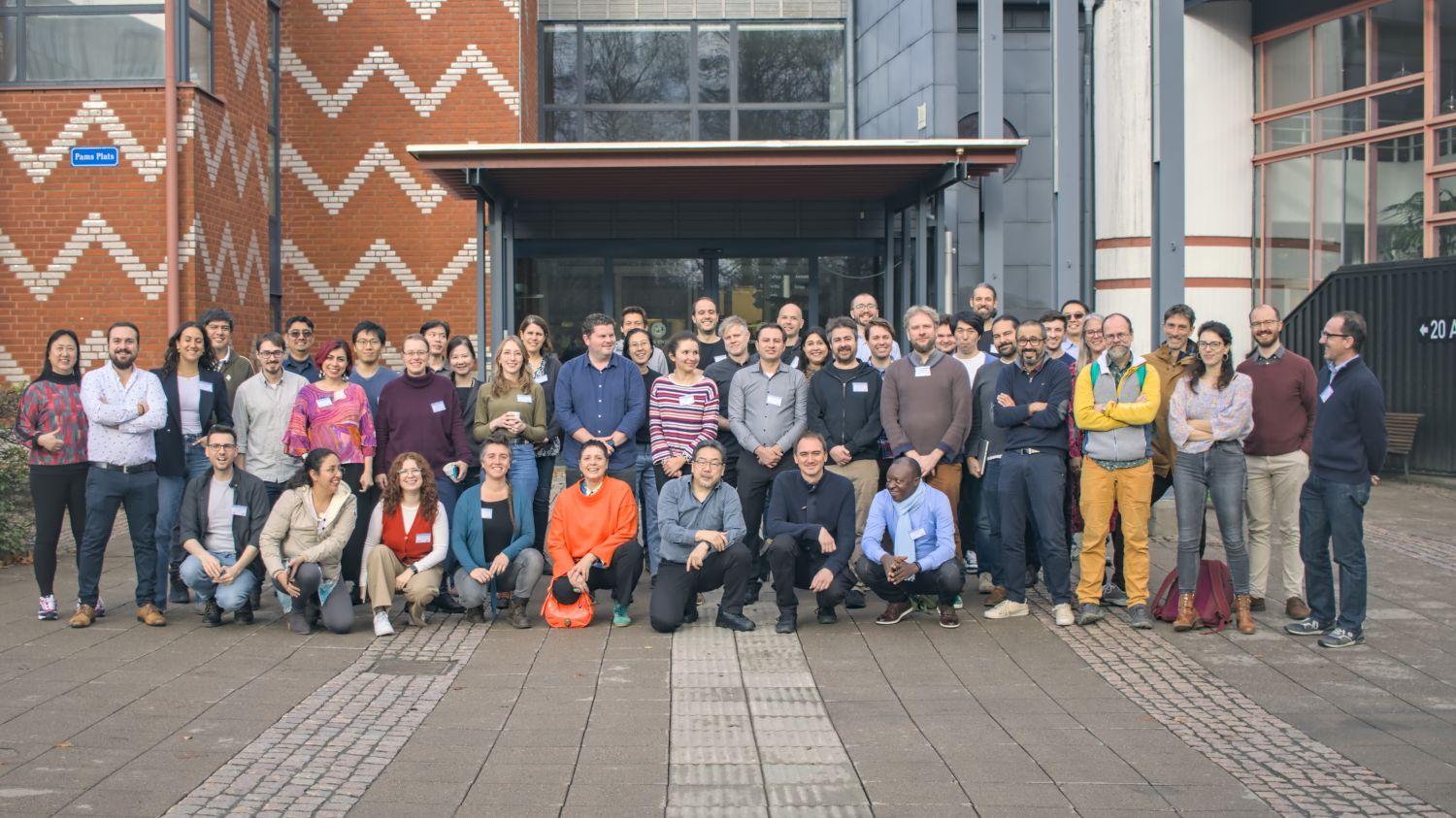
Martin Schätz co-authors a paper in the prestigious journal Nature Methods
Modern biology increasingly relies on images—from microscopes showing cells and tissues to large datasets tracking disease and development over time. Bioimage analysis is the process of turning these images into meaningful numbers and measurements, helping scientists answer questions such as how cells grow, how diseases progress, or how treatments work. As imaging technologies advance, analyzing this data has become a major scientific challenge that requires specialized skills and global cooperation.
A new paper, “GloBIAS: Strengthening the Foundations of Bioimage Analysis,” presents the Global BioImage Analysts’ Society (GloBIAS) as a worldwide, community driven solution. The publication describes how GloBIAS brings together analysts, scientists, software developers, and educators to improve how biological images are analyzed, shared, and interpreted. Based on a global community survey, the paper shows how coordinated working groups, shared guidelines, training, and open support systems can make bioimage analysis more reliable, accessible, and sustainable for research worldwide.
Martin Schätz is a co author of the paper and contributed to its original writing and editorial development. His contribution is built on long term community engagement: he has been a GloBIAS volunteer since the initiative’s beginning, is active in the Communication, Publication, and Survey 2024 Working Groups, and participated in early open support activities such as GloBIAS Free Help Sessions. Through both authorship and community work, his role supports the paper’s central message—that strong, inclusive scientific communities are essential for turning images into scientific knowledge.
Corbat, A. A., Walther, C. G., de la Ballina, L. R., Condon, N. D., Felder, A. A., Schätz, M., et al. GloBIAS: strengthening the foundations of bioimage analysis. Nat Methods (2026). https://doi.org/10.1038/s41592-026-03060-7