







Vít Svoboda Wins the Dream Chemistry Award
Ideas bold enough to push the boundaries of human imagination form the foundation of the Dream Chemistry Award, a competition aptly named to reflect its mission. The award is a joint initiative of the Institute of Organic Chemistry and Biochemistry of the Czech Academy of Sciences (IOCB Prague) and the Institute of Physical Chemistry of the Polish Academy of Sciences (IChF PAS). Success in the competition is not measured by the number of publications in prestigious scientific journals; instead, applications are evaluated by an international expert committee primarily on the originality of the proposed scientific project. This year, for the first time, the competition was won by a representative of the Czech Republic—Dr. Vít Svoboda from the Department of Physical Chemistry at UCT Prague.
Vít Svoboda, incidentally also the first Czech scientist to reach the final top five, entered the competition with an idea to use chiral (mirror-asymmetric) molecules to create ultrafast quantum computers. Instead of electricity and silicon, such computers would rely on light, quantum physics, and “left-handed” and “right-handed” molecules. The project proposes a completely new approach to computation, combining molecular shape, electron spin, light, and ultrafast optics. The author himself comments:
“I partly adapted the project for the Dream Chemistry Award, but it is based on ideas I have been developing for quite some time. The nomination motivated me to elaborate on these concepts, expand them, and transform them into a coherent and ambitious proposal. Preparing for the competition helped me clarify the direction I would like to pursue much more systematically in the future.”
This unique scientific competition brings together researchers who are no more than seven years past completing their PhD. Its aim is to support young talents and encourage them not to give up on their dreams in chemical research and related fields. The competition seeks innovative solutions to problems with global impact, with a strong emphasis on the potential benefit such discoveries could bring to society as a whole.
Candidates are nominated by their senior and internationally recognised colleagues from scientific institutions around the world. If the nominated researchers accept the nomination and submit a project proposal, they undergo evaluation by an international scientific committee. Professor Pavel Jungwirth from IOCB Prague, the organiser of the Czech branch of the competition and a key figure in the collaboration with the Polish Academy of Sciences from the very beginning, explains:
“To succeed in this competition means to present a chemical research project that makes you say, ‘This is a dream,’ while still believing that it could realistically be achieved. In the past, winners have come from the world’s top universities such as Oxford, Cambridge, or Harvard. This year, for the first time in the history of the competition, a Czech scientist from a local university has won, which I see as a strong sign that our science is becoming truly world-class.”
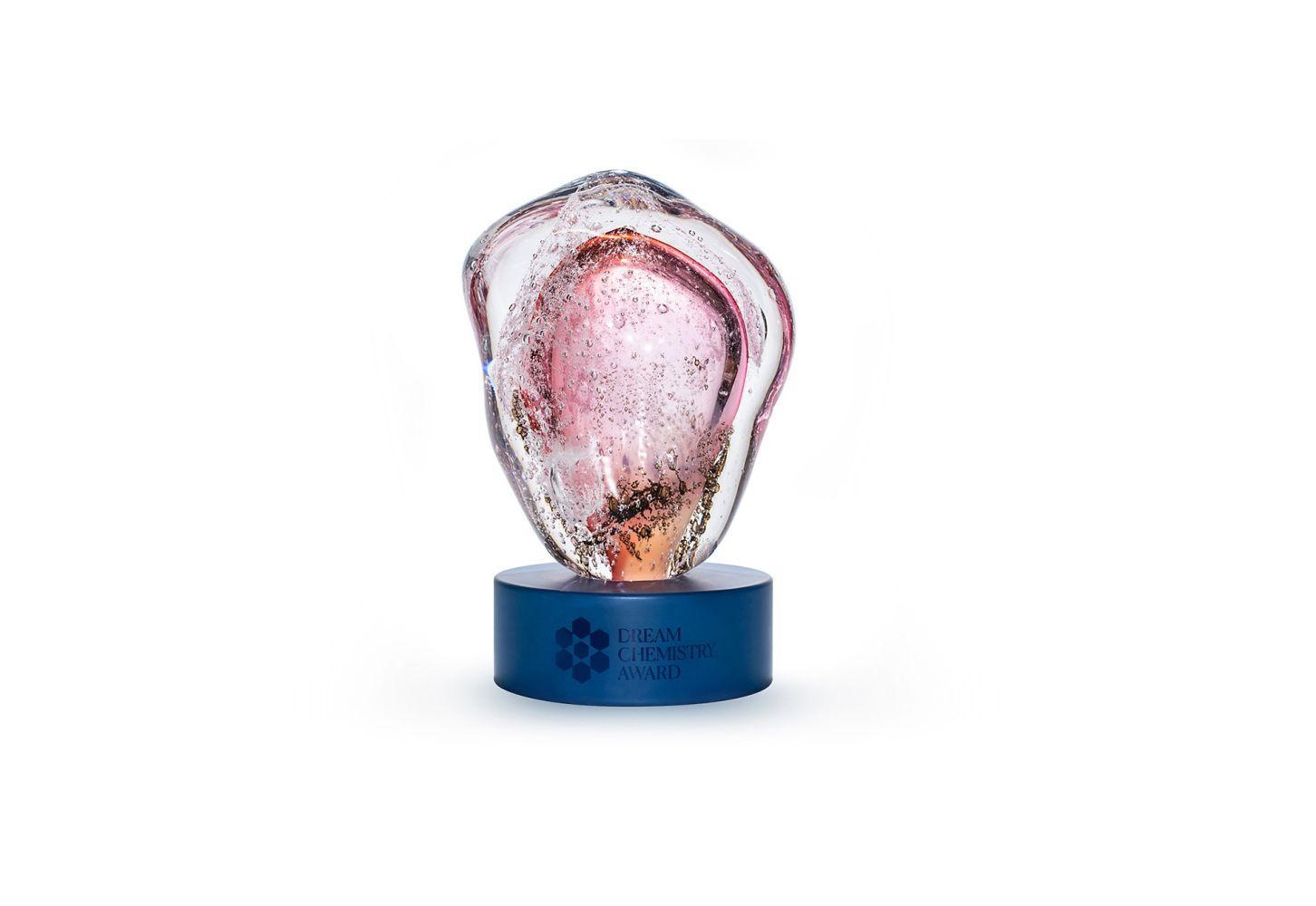
The main Dream Chemistry Award includes a unique glass trophy and a financial reward of €10,000. The remaining finalists receive the TOP 5 Prize along with a financial award of €1,000. The host of this year’s edition, Professor Jan Konvalinka, Director of IOCB Prague, explains why the competition is so important to him:
“Most scientific awards are given for achievements that have already been accomplished. In this case, it is plans and dreams that are being recognised. The winners are scientists who present the boldest yet realistic projects. Without courage, truly interesting science simply cannot be done.”
The Dream Chemistry Award was founded ten years ago by Professor Robert Hołyst of IChF PAS. In 2017, IOCB Prague joined the organisation of the competition, and since then it has been held annually, alternating between Prague and Warsaw.
This year’s Dream Chemistry Award took place at IOCB Prague and was organised with financial support from the IOCB Tech Endowment Fund.
Source: IOCB Prague press release